AI Packaging Design: From Brief to Mockup Set in 30 Minutes
Packaging design is the highest-leverage step in product launch — the unboxing photo IS the marketing. Until 2025, AI was good enough for *concept* mockups but designers still spent 8-15 hours per SKU in Illustrator to ship a print-ready pack. What changed: prompt templates that bake in **packaging grammar** (label hierarchy, ingredient strip, barcode block, brand color anchor) so the operator gets a coherent mockup set from one prompt. The bottleneck is no longer designer hours; it's the brief. *AI packaging design* searches grew to 170/month at $3.21 CPC — strong commercial intent from operators who want a real production pipeline. This guide covers the four packaging patterns that ship cleanly today: food product packaging, IP creative cultural goods mockup, gift box + stationery set, and full brand VI visual pack.
What "AI packaging design" actually delivers (and where production starts)
AI packaging design = a prompt template renders a packaging mockup (front + side + 3D rotation) with consistent label hierarchy, brand color anchor, and the standard packaging grammar elements (ingredient strip, barcode, certification badges). The template encodes the conventions so the operator only specifies the *product*.
What it is not: the final dieline. AI gives you the visual mockup (Instagram-ready, deck-ready, mood-board-ready). The print-ready dieline (with bleed, knife-cut, color separations) still happens at packaging vendors like Lab Brands, Packlane, or Pakible. The AI step replaces the 8-15 designer hours per SKU on the *creative* side, not the production engineering on the manufacturing side.
Four packaging patterns that ship cleanly today: (1) food product packaging (single-SKU front-and-side), (2) IP creative cultural goods mockup (multi-SKU merchandise set), (3) gift box + stationery set mockup (premium unboxing), (4) full brand VI visual pack (entire identity system across collateral). Each maps to a Curify template family.
Four AI packaging patterns that ship cleanly
Pattern 1: Food product packaging — single-SKU front-and-side
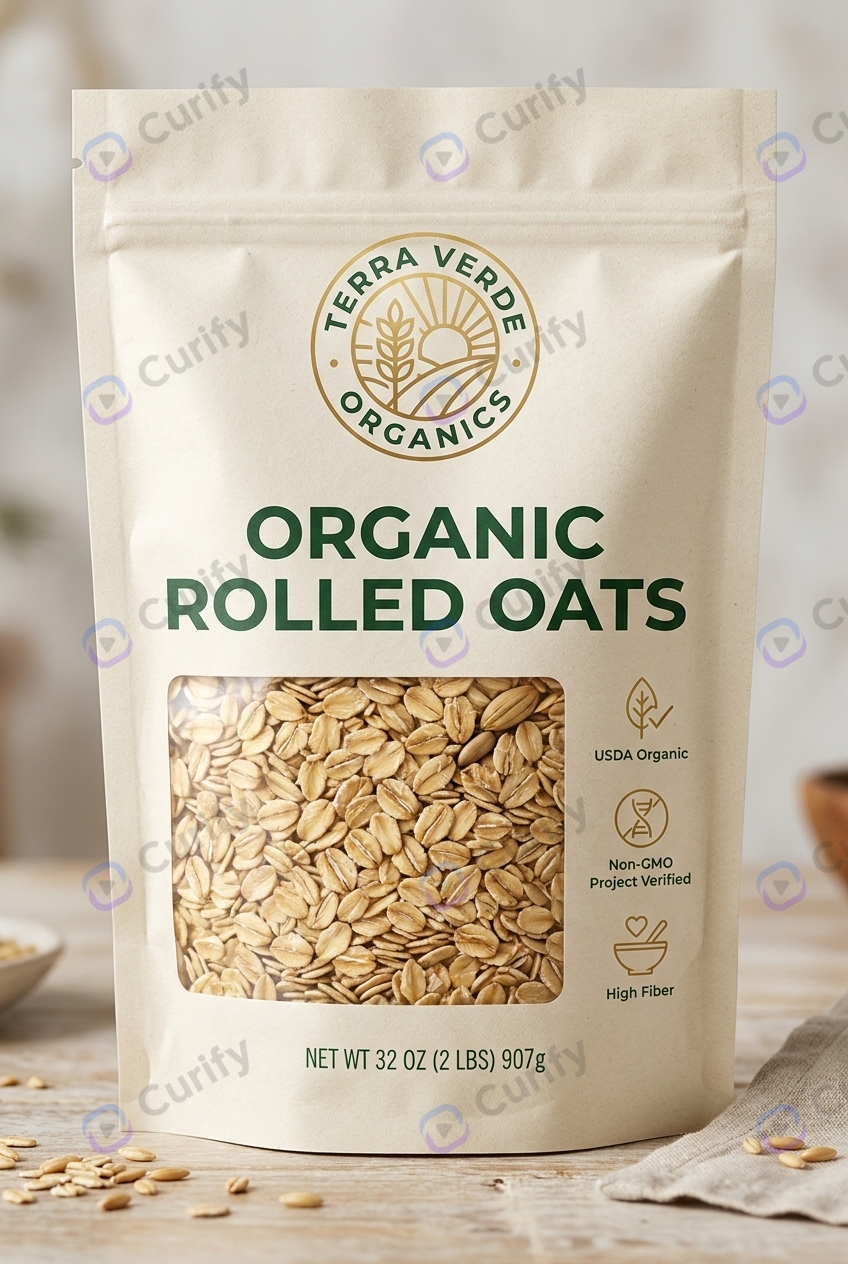
Food packaging is the highest-volume use case. CPG launches, DTC food brands, and POD operators all need front-of-pack mockups before the bottle/box dieline goes to the printer. The Curify template generates front + side + ¾ rotation for one SKU in unified label hierarchy.
Open the Food Product Packaging Design template →
What the template bakes in: USDA Organic badge positioning, nutrition panel side-of-pack standard, ingredient strip vertical alignment, bottom barcode block, paper-stock-friendly color palette. Most AI generators put the certification badge in the wrong corner and reverse the ingredient panel — this template handles all of it.
Use case map: new CPG SKU launches (food + beverage + snack brands), DTC pivot decks (changing pack design for a new ICP), Shark Tank pitch decks (showing 3 SKU variations in 30 minutes).
Pattern 2: IP creative cultural goods — multi-SKU merchandise system
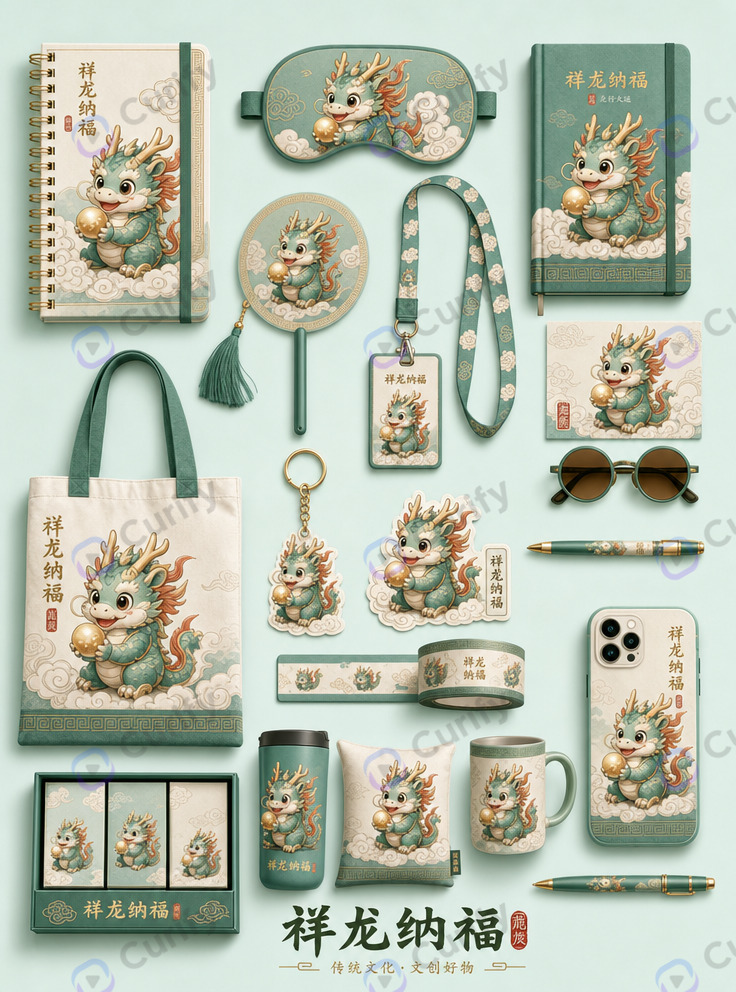
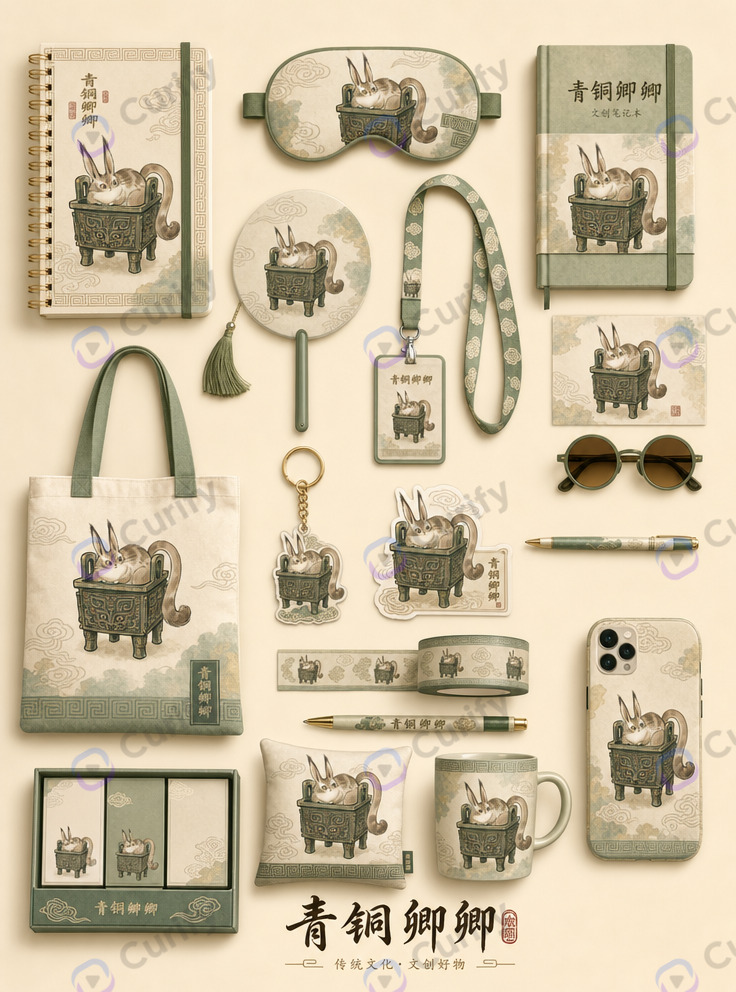
Move past single-SKU packaging into a full merchandise system. The Curify template generates 4-6 SKUs around one character IP or brand — tote, mug, sticker pack, postcard, enamel pin — all in unified palette and design language.
Open the IP Creative Cultural Goods Mockup Set template →
Why this matters for merch operators: the SKU-velocity wall is the #1 pain point for POD operators scaling past 50 SKUs (per r/printondemand demand mining). One prompt produces 4-6 visually-coherent SKUs — that's a full small-batch product line in 5 minutes of render time.
Use case map: Licensing Expo IP pitches (showing how an IP extends across merchandise), museum gift shops (one motif → mug + tote + scarf + postcard), Etsy multi-SKU product photography.
Pattern 3: Gift box + stationery set — premium unboxing tier
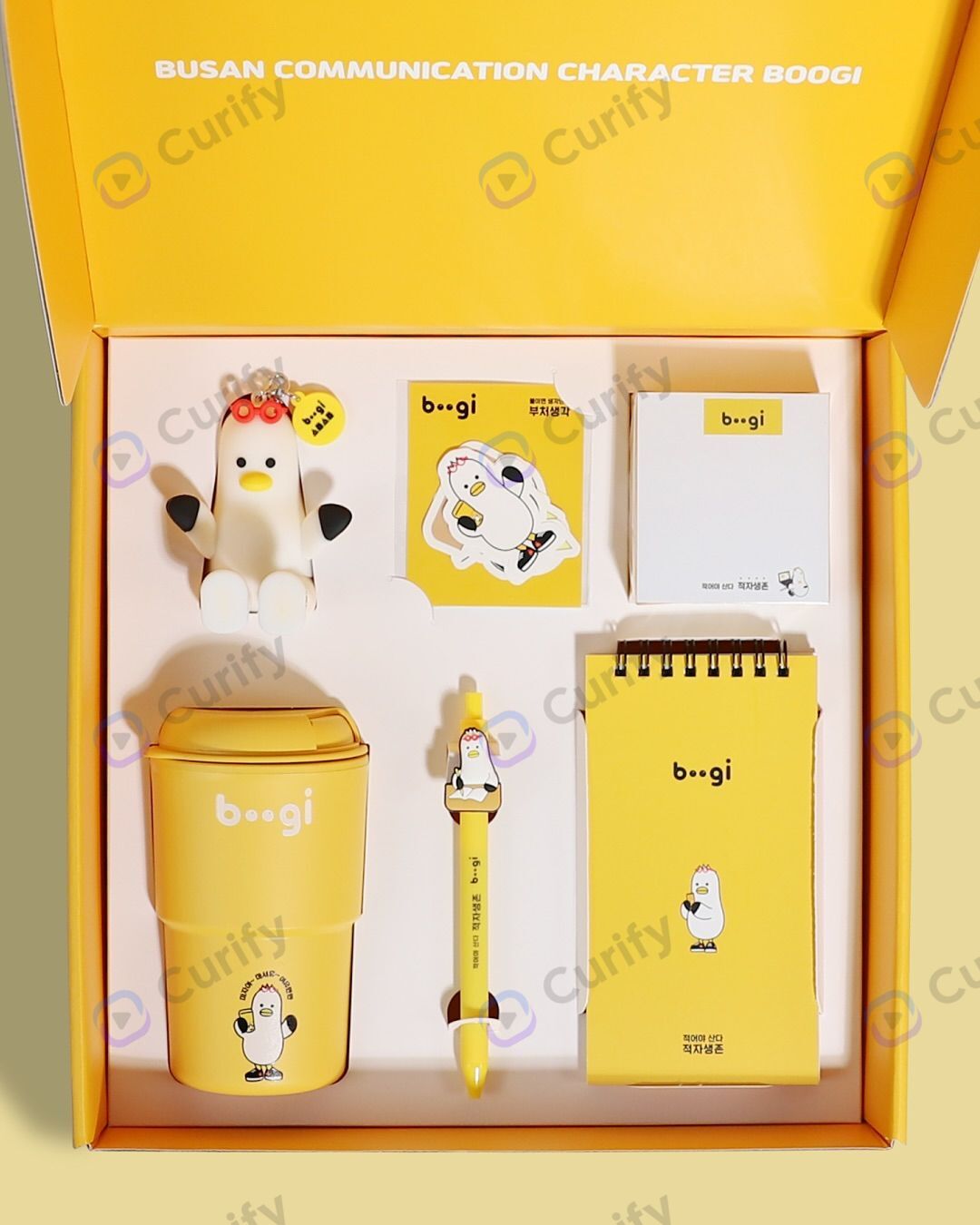
Premium gift box mockups command 3-5x the retail price of equivalent single SKUs. The Curify template generates the full unboxing-ready set: branded outer box + notebook + postcard + pin + hangtag in coordinated palette.
Open the Gift Box + Stationery Mockup template →
Why this composition is so commercially valuable: a Busan Boogi Duck gift box retails $35-50 on Etsy vs $4 for a single sticker. The perceived-value lift comes from the unboxing experience — multiple SKUs in coordinated palette read as an *intentional collection* rather than a one-off product.
Use case map: kids brand launches, museum/gift-shop premium SKUs (KD 45/110 "museum merchandise" is a sister opportunity), Q4 holiday packs, corporate gift packs.
Pattern 4: Full brand VI visual pack — entire identity system
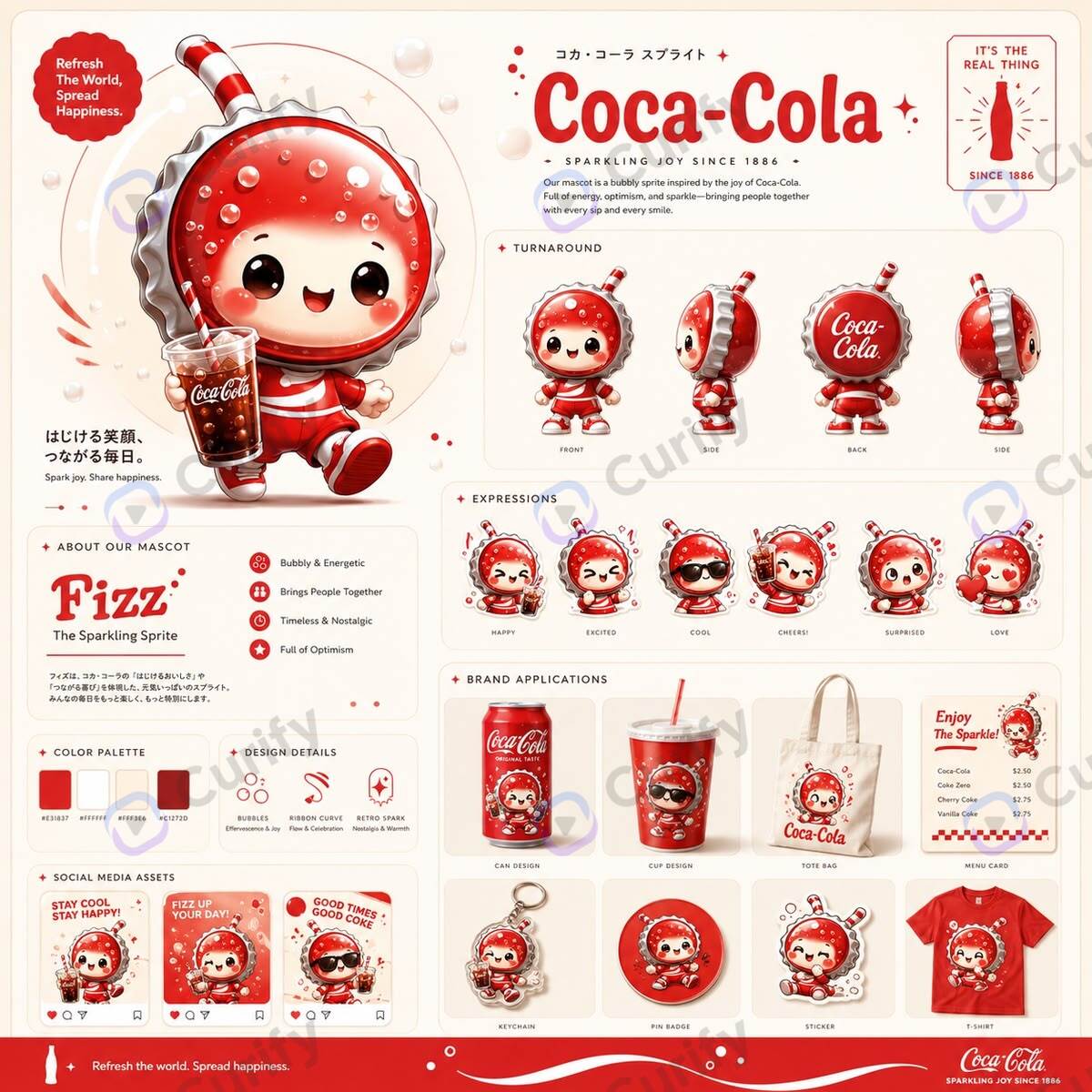
When you're launching a NEW brand (not just a new SKU), the Curify Brand VI template renders the complete Day-1 deck: logo + secondary mark + packaging applications + collateral + signage + digital. One prompt produces the entire system.
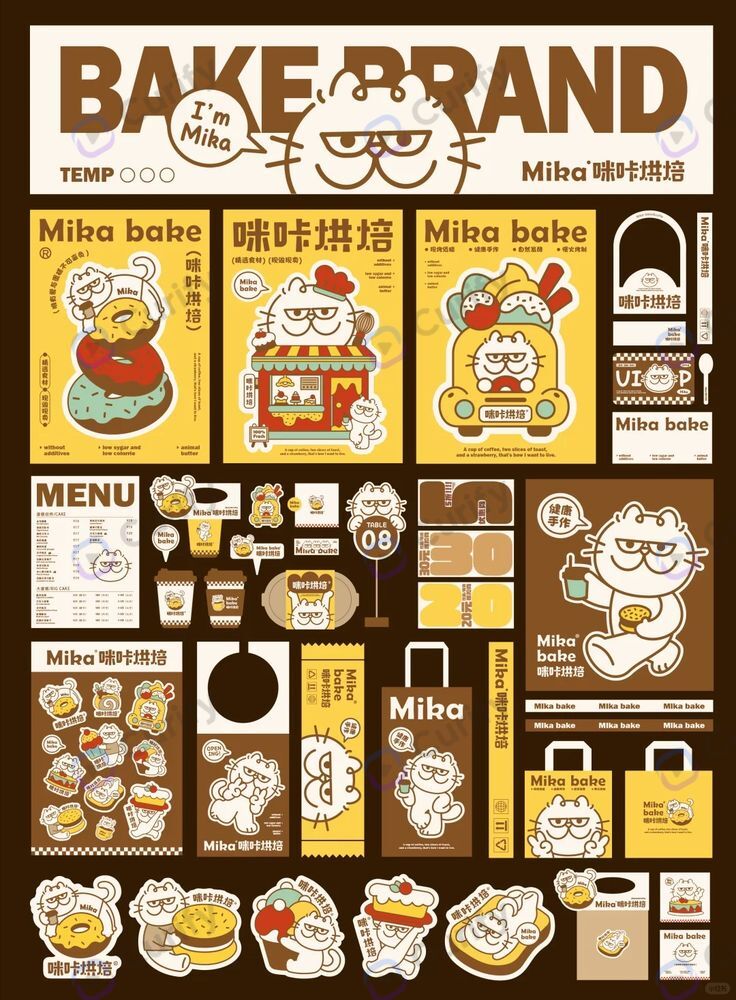
Open the Brand VI Full Visual Pack template →
Why this scales for brand strategy work: an early-stage agency or in-house brand strategist would normally build a Day-1 deck over 4-6 weeks. The template doesn't replace that judgment work — it accelerates the visual mockup step so the strategist can show 3 directional options to stakeholders in the first review meeting instead of the third.
Use case map: F&B brand launches, café/bakery openings, corporate event identity systems, kickstarter campaign visual stories.
Prompt phrases that move the dial on AI packaging
Material vocabulary that produces print-ready output: *"kraft paper texture"* (eco-conscious premium), *"matte foil-stamped logo on dark navy"* (luxury / Whole Foods tier), *"clear glass jar with paper label and twine"* (artisan / farm-to-table), *"glossy white plastic squeeze tube"* (mass-market CPG).
Composition vocabulary: *"front-of-pack, side-of-pack, and ¾ rotation, three angles in unified lighting"* (the magic prompt for usable mockup sets vs. a single hero shot), *"flat-lay top-down with shadow"* (Instagram-ready), *"in-context lifestyle shot in kitchen / store shelf"* (sales deck-ready).
Pitfalls to avoid: generic *"AI-generated packaging"* produces stock-photo output. Always specify the *substrate* (paper / plastic / glass / metal) AND the *finish* (matte / glossy / foil / kraft) AND the *brand tier*. Models also tend toward gradient backgrounds — ask for *"clean white background, isolated product mockup"* for deck-ready output.
Resolution cue: ask for *"3000×3000 pixel, print-ready resolution"*. Don't accept lower than 2048×2048 — pixelates on retina displays during pitches.
Where AI packaging design still needs a human
Label compliance is yours. Templates render *visual layout*, not validated FDA / regulatory marks. Treat AI output as a mockup, not a printable final pack.
Print color shifts. Pantone 186 red on screen ships as desaturated brick on uncoated kraft. Order a $50 short-run sample before scaling.
Multi-SKU palette drift. Render the full series in one prompt session — separate sessions drift even within the same template.
Trademark risk. AI-generated 'Hello Kitty packaging' is a takedown trap. The IP templates work because you specify *original* IP (Blessing Dragon, Boogi Duck) and the template generates derivative-original characters.
Mockup ≠ unboxing. A perfect render doesn't tell you how the foam holds the pin or how the box opens. Prototype the physical experience with a 25-unit sample run ($200-400 at Sticker Mule or Pakible) before scaling.
AI packaging tools compared
Curify — template-based; ships packaging grammar (label hierarchy, ingredient strip, multi-angle composition) baked into 4 template families. Best for operators producing 5-50+ SKU mockups per month with style coherence needs.
MidJourney / DALL·E / Stable Diffusion — beautiful single-image output but no multi-angle composition or label structure. Best for one-off hero shots, not usable mockup sets.
Adobe Firefly inside Photoshop — best as a finishing tool on top of generated mockups, not for from-scratch generation.
Smartmockups / Placeit — putting *your existing design* into a mockup scene; not generative output.
For 10-100 SKU mockups/month with style coherence requirements, template-based generation wins on speed + consistency.
Two paths for packaging design teams
Path A — DIY with Curify templates. Solo founders, early-stage brand owners, in-house design teams scaling past their first 10 SKUs. Use the 4 templates via /nano-template, then ship to your packaging vendor for dieline + production.
Path B — Operator licensing for catalog-scale shops. Brand agencies, packaging studios, large POD operators producing 50+ SKU mockups per month. Licenses as API + custom-template authoring. Best when you're hitting the SKU-velocity wall most studios hit past 50 SKUs.
For the broader merchandise vertical including sticker design + die-cut production, see the AI Sticker Design Guide and Die-Cut Sticker Design sibling posts. Operator-side persona: /use-cases/for-merch-operators.
Ship your first packaging mockup this week
Pick the highest-priority SKU in your designer queue and run it through the matching template — 5-15 minutes from prompt to deck-ready mockup. For full brand launches, the Brand VI Pack produces a Day-1 directional deck in under an hour.
Reach out via /contact for operator licensing or custom template work.
Popular Template Examples
Explore our most popular Nano Banana prompt templates to see what's possible:
Take the next step
Putting what you read into practice.
Related Articles
AI Strategy
AI Makeover Templates: 4 Patterns from Selfie to Style Transformation
Designer Toy IP Merchandise Design: The 2026 AI Production Workflow